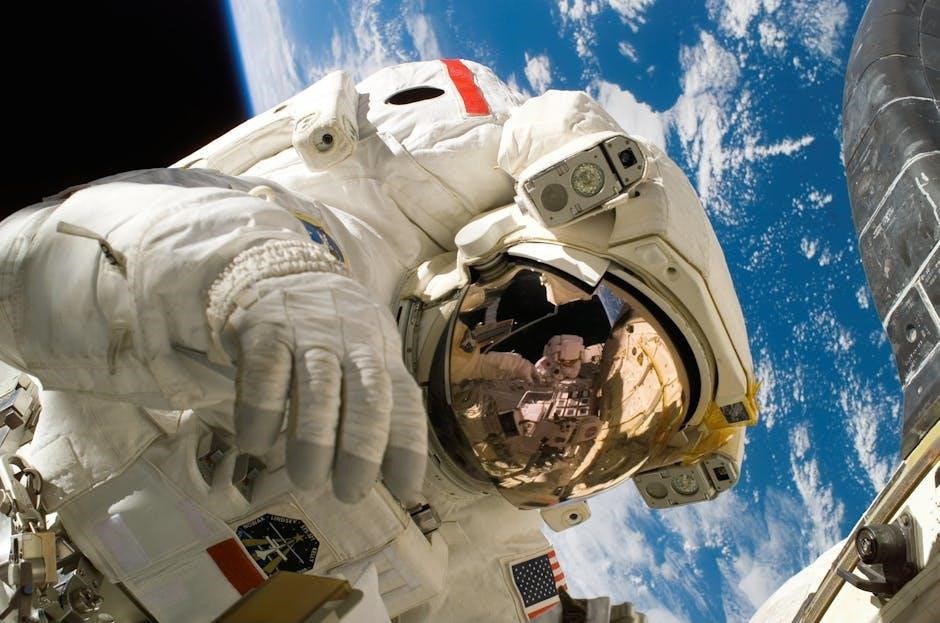
Returning to Earth presents unique hurdles for astronauts, a phenomenon often termed “reverse culture shock.”
Extended stays in microgravity profoundly alter the body and mind,
requiring significant readjustment to terrestrial life, as evidenced by recent NASA missions and astronaut experiences.
Astronauts, like Frank Rubio, face unexpected challenges,
including extended missions due to unforeseen circumstances,
highlighting the complexities of space travel and subsequent re-entry.
The transition isn’t merely physical; it’s a profound psychological shift,
with astronauts grappling with a changed perspective and feelings of disconnection upon their return.
The Unique Challenges of Re-entry

Re-entry isn’t simply a return “home”; it’s a complex physiological and psychological transition. Astronauts returning from long-duration spaceflight, like those experiencing the unexpected extensions seen with Frank Rubio’s mission, face a cascade of challenges immediately upon splashdown. The body, accustomed to weightlessness, must rapidly readjust to Earth’s gravity.
This isn’t a smooth process. Initial difficulties include simply sitting and standing, tasks taken for granted on Earth. The cardiovascular system, having adapted to reduced blood flow demands in space, struggles to regulate blood pressure effectively. Furthermore, the vestibular system, responsible for balance, is profoundly disrupted, leading to dizziness and instability.

Beyond the physical, astronauts often report a sense of disorientation and a struggle to reintegrate into everyday life. The sheer volume of sensory input – noise, light, smells – can be overwhelming after the relatively sterile environment of the spacecraft. This re-entry period demands dedicated medical monitoring and rehabilitation protocols, as pioneered by NASA, to mitigate these effects.
Beyond the Headlines: A Deeper Look
The publicized difficulties of re-entry often only scratch the surface of the astronaut experience. While reports detail struggles with sitting, standing, and balance, a more profound shift occurs in perspective; Astronauts, having witnessed Earth from afar – experiencing what’s known as the “Overview Effect” – often return with a changed worldview, a sense of interconnectedness, and a heightened appreciation for life.
However, this newfound perspective can paradoxically lead to feelings of isolation. Communicating the intensity of this experience to those who haven’t shared it proves challenging, fostering a sense of disconnection from family and social circles. The simple act of reintegrating into daily routines, as noted in recent NASA conferences, becomes unexpectedly difficult.
Astronauts require support not just for physical rehabilitation, but also for navigating this complex emotional landscape. Understanding these deeper, less-reported challenges is crucial for providing comprehensive post-flight care.

Physical Readjustment: Gravity’s Pull
Earth’s gravity presents a significant physical challenge after prolonged exposure to microgravity, demanding extensive rehabilitation.
Astronauts experience muscle atrophy and bone density loss, requiring focused recovery efforts upon return.
Musculoskeletal System: Rebuilding Strength
The musculoskeletal system undergoes substantial changes in space, primarily due to the lack of constant gravitational stress. Astronauts experience significant muscle atrophy, particularly in the legs and core, as these muscles are less utilized in a microgravity environment. Bone density also decreases, increasing the risk of fractures upon return to Earth.
Rebuilding strength is a crucial component of post-flight rehabilitation. NASA employs rigorous exercise protocols, including resistance training and weight-bearing exercises, to counteract these effects. Astronauts often begin with gentle exercises, gradually increasing intensity as their strength improves. Physical therapy plays a vital role, focusing on restoring range of motion and preventing injuries.
The process isn’t quick; it can take months, even years, to regain pre-flight strength and bone density. Consistent effort and adherence to the rehabilitation program are essential for a full recovery, ensuring astronauts can safely reintegrate into daily life and maintain long-term health.
Cardiovascular System: Adapting to Earth’s Pressure
In microgravity, fluids redistribute upwards in the body, leading to a decrease in blood volume and a reduction in the heart’s workload; This causes the heart muscle to weaken and shrink over time. Upon returning to Earth, astronauts experience orthostatic intolerance – difficulty maintaining blood pressure when standing – as blood pools in the lower extremities due to gravity’s pull.
Readjustment requires the cardiovascular system to rapidly adapt to Earth’s pressure. NASA utilizes pre-flight conditioning and post-flight interventions, including fluid loading and compression suits, to mitigate these effects. Gradual re-introduction to upright posture is crucial, often aided by specialized exercise equipment.
Monitoring heart rate and blood pressure is paramount during the initial recovery phase. The cardiovascular system typically recovers within weeks to months, but long-term monitoring is essential to assess any lasting impacts of spaceflight.
Vestibular System: Regaining Balance
The vestibular system, responsible for balance and spatial orientation, is significantly disrupted in microgravity. Without the constant pull of gravity, the fluid within the inner ear settles, leading to a diminished sense of “up” and “down.” Astronauts often experience motion sickness during the initial days of spaceflight as their brains attempt to reconcile conflicting signals from the visual and vestibular systems.
Upon return to Earth, the vestibular system must recalibrate to gravity. This process can cause dizziness, instability, and difficulty with coordination. Specific exercises, including those focusing on gaze stabilization and postural control, are vital for rehabilitation.
Recovery timelines vary, but regaining full balance can take weeks or even months. Astronauts report challenges with simple tasks like walking and maintaining equilibrium, highlighting the profound impact of spaceflight on this crucial sensory system.

Sensory Overload: A World of New Stimuli
Earth’s sensory environment overwhelms astronauts post-flight; heightened senses react to familiar stimuli like noise and light.
Re-learning spatial awareness is crucial after prolonged exposure to microgravity’s unique conditions.
The Heightened Senses Post-Flight
Upon returning to Earth, astronauts often report a dramatic increase in sensory perception. This isn’t necessarily a positive experience, as everyday stimuli can become overwhelmingly intense. After months in the relatively muted environment of space, the brain recalibrates, leading to a heightened sensitivity to sights, sounds, smells, and even touch.
This sensory amplification is thought to be a result of the brain attempting to compensate for the reduced sensory input experienced in microgravity. The nervous system, no longer needing to filter out constant motion and spatial disorientation, becomes acutely aware of even subtle sensations. Astronauts describe colors appearing more vibrant, sounds seeming louder, and smells being far more potent than remembered.
This period of heightened sensitivity can be disorienting and even distressing, requiring a period of adjustment as the brain learns to regulate sensory input once again. It’s a testament to the brain’s remarkable plasticity and its ability to adapt to extreme environments, but also a reminder of the challenges inherent in re-entry.
Dealing with Noise and Light
The cacophony of Earthly sounds and the brilliance of natural light can be particularly jarring for returning astronauts. Accustomed to the controlled, relatively quiet environment of a spacecraft, the constant barrage of noise – traffic, conversations, even household appliances – can be overwhelming. Similarly, the intensity of sunlight after prolonged exposure to filtered light in space requires adjustment.
Astronauts often find themselves seeking quiet, dimly lit spaces to mitigate sensory overload. Sunglasses become essential, even indoors, and noise-canceling headphones can provide a much-needed respite from the constant auditory stimulation. Gradual re-exposure is key; slowly increasing tolerance to both noise and light levels allows the brain to adapt without becoming overwhelmed.
NASA’s post-flight protocols often include controlled sensory environments to facilitate this process, recognizing that managing noise and light is crucial for psychological well-being during the re-adaptation phase.
Re-learning Spatial Awareness
Spatial awareness, fundamentally altered in microgravity, requires significant recalibration upon returning to Earth. Astronauts, having navigated a three-dimensional environment without the constant pull of gravity, often experience difficulties with depth perception, balance, and judging distances. Simple tasks like walking, pouring liquids, or even reaching for objects can become unexpectedly challenging.
The brain needs to re-learn how to interpret sensory input in a gravitational context. This process involves rebuilding neural pathways responsible for proprioception – the sense of body position and movement. Physical therapy plays a vital role, incorporating exercises designed to restore spatial orientation and coordination.
Initially, astronauts may rely heavily on visual cues, consciously focusing on their surroundings to maintain balance and navigate effectively. Over time, with consistent rehabilitation, spatial awareness gradually returns to a more natural state.

Psychological Impact: Perspective and Isolation
Astronauts often report a profound shift in perspective, the “Overview Effect,” alongside feelings of disconnection upon return.
Reintegrating into society,
and family life, presents unique emotional challenges after extended isolation.
Experiencing Earth from space fosters a broadened worldview,
but can also lead to difficulty relating to everyday concerns,
as highlighted by recent astronaut reflections.
The “Overview Effect” and its Aftermath
The “Overview Effect” is a transformative experience reported by many astronauts, characterized by a cognitive shift in awareness. Seeing Earth as a fragile, interconnected system from the vantage point of space profoundly alters one’s perspective on humanity and the planet.
However, this newfound perspective isn’t always easily integrated back into terrestrial life. Astronauts often describe a sense of detachment, struggling to reconcile the vastness of space with the seemingly trivial concerns of everyday existence. This can lead to feelings of isolation and difficulty reconnecting with pre-flight values and priorities.
Melvin, as reported by NPR, expressed feeling “healthier” with a “newfound perspective” after his spaceflight, but this positive shift doesn’t negate the challenges of readjustment. The aftermath of the Overview Effect requires processing and integration, often aided by psychological support and peer groups, to navigate this profound change in worldview.
Combating Feelings of Disconnection
Re-entry often triggers feelings of disconnection, stemming from the profound shift in perspective experienced in space. Astronauts may struggle to relate to everyday concerns, finding pre-flight social interactions less meaningful. This isolation isn’t simply emotional; it’s a fundamental challenge in reintegrating into a world perceived differently.
NASA’s post-flight protocols recognize this, emphasizing the importance of robust psychological support. Open communication with family and friends is crucial, but requires patience and understanding from both sides. Sharing experiences, even if difficult to articulate, can bridge the gap.
Furthermore, engaging in activities that foster a sense of purpose and connection – volunteering, pursuing hobbies, or contributing to meaningful projects – can help astronauts rebuild a sense of belonging. Recognizing that readjustment is a process, not an event, is key to navigating this challenging phase.
Reintegrating into Family and Social Life
Returning home doesn’t automatically equate to seamless reintegration with family and friends. Astronauts often find that relationships have evolved during their absence, requiring renewed effort to reconnect. Expectations on both sides need careful management; loved ones may struggle to understand the astronaut’s altered perspective.
Open and honest communication is paramount. Astronauts should proactively share their experiences, acknowledging the challenges of readjustment. Simultaneously, actively listening to the experiences of family and friends is vital. Patience is key, as rebuilding intimacy and shared routines takes time.
Gradual re-engagement in social activities, rather than overwhelming oneself, can ease the transition. Participating in familiar hobbies and creating new shared experiences can strengthen bonds and foster a sense of normalcy. Seeking support groups with fellow astronauts can also provide valuable camaraderie.

Daily Life Adjustments: Simple Tasks, New Hurdles
Everyday actions become surprisingly difficult after prolonged spaceflight, as astronauts relearn basic motor skills.
Simple tasks like sitting, standing, eating, and sleeping require conscious effort and adaptation to Earth’s gravity.
The Difficulty of Sitting and Standing
Re-acclimating to Earth’s gravity presents immediate challenges regarding posture and balance. Astronauts returning from space often find sitting and standing surprisingly difficult, requiring significant muscle re-education. After extended periods in microgravity, the muscles responsible for maintaining upright posture weaken considerably.
Initially, astronauts may struggle to control their movements, experiencing instability and a tendency to fall. The sensation of weight bearing is novel, and the body needs time to recalibrate its proprioceptive systems – the senses that perceive body position and movement. Recovery teams observe astronauts still being strapped into seats post-landing, emphasizing the need for gradual reintroduction to upright positions.
Even seemingly simple actions, like rising from a chair, can be exhausting and require assistance. Physical therapy plays a crucial role in rebuilding strength and coordination, helping astronauts regain the ability to perform these fundamental movements with confidence and ease. This process highlights the profound impact of spaceflight on the human musculoskeletal system.
Eating and Digestion: A Return to Normality
Re-establishing normal eating and digestive functions is a key aspect of post-flight recovery. In space, astronauts consume specially prepared food, and the digestive system adapts to microgravity, often experiencing reduced motility. Upon returning to Earth, reintroducing a standard diet can initially cause discomfort and digestive upset.
Astronauts often report changes in appetite and taste perception. The body needs time to readjust to processing food with gravity, and the gut microbiome requires rebalancing. Simple tasks like chewing and swallowing can feel different, and the sensation of fullness may be altered.
NASA’s recovery protocols include carefully monitored dietary reintroduction, focusing on easily digestible foods. Hydration is also crucial, as fluid regulation is affected by gravity. Ultimately, restoring normal eating and digestion is vital for overall health and well-being during the re-adaptation phase.
Sleep Patterns: Resetting the Internal Clock
Disrupted sleep is a common challenge for astronauts returning to Earth. The space environment lacks the natural cues – daylight and darkness – that regulate the body’s circadian rhythm. Astronauts often experience altered sleep-wake cycles during missions, and re-establishing a normal sleep pattern post-flight requires deliberate effort.
Upon return, astronauts may struggle with insomnia, excessive daytime sleepiness, or fragmented sleep. This is due to the misalignment between their internal clock and Earth’s 24-hour cycle. Exposure to natural light, consistent bedtimes, and a relaxing pre-sleep routine are recommended.
NASA’s post-flight protocols often include sleep monitoring and guidance from specialists. Gradual re-synchronization is key, avoiding abrupt changes to sleep schedules. Prioritizing sleep is crucial for physical and cognitive recovery, aiding the overall readjustment process.

Medical Monitoring and Rehabilitation
Comprehensive medical evaluations and rehabilitation are vital for astronauts post-flight,
ensuring long-term health and addressing the physiological effects of space travel,
guided by NASA’s established recovery protocols.
Physical therapy plays a crucial role in rebuilding strength and regaining function,
while ongoing monitoring assesses potential long-term health considerations.
NASA’s Post-Flight Recovery Protocols
Upon splashdown, astronauts undergo immediate medical assessment within the recovery capsule, focusing on vital signs and initial stabilization. This is followed by transport to a dedicated medical facility for a more thorough evaluation, including neurological, cardiovascular, and musculoskeletal examinations.
NASA employs a phased rehabilitation program, beginning with gentle exercises to counteract muscle atrophy and bone density loss experienced in microgravity. Astronauts receive specialized physical therapy to rebuild strength, balance, and coordination. Dietary adjustments are also implemented to support physiological recovery and replenish lost nutrients.

Psychological support is integral, addressing potential feelings of isolation or disorientation. Regular monitoring continues for months, even years, post-flight, tracking long-term health impacts and adapting rehabilitation strategies as needed. These protocols are continuously refined based on data gathered from each mission, ensuring optimal astronaut well-being.
Long-Term Health Considerations
Prolonged spaceflight poses potential long-term health risks, demanding ongoing monitoring of astronauts even after extensive rehabilitation. Concerns include increased radiation exposure, potentially elevating cancer risk, and subtle cardiovascular changes impacting heart health. Bone density loss, despite rehabilitation, may not fully recover, increasing fracture susceptibility later in life.
Neurological effects, such as vision changes linked to intracranial pressure, require continuous assessment. The psychological impact of space travel, including the “Overview Effect” and readjustment difficulties, can contribute to mental health challenges. NASA actively researches these long-term effects, seeking preventative measures and interventions.
Data from astronauts like Frank Rubio, with extended missions, are crucial for understanding these risks. Lifelong health monitoring and personalized care plans are becoming standard practice, ensuring astronauts receive appropriate support throughout their lives.
The Importance of Physical Therapy
Physical therapy is absolutely critical in an astronaut’s post-flight recovery, addressing the significant musculoskeletal and neurological deficits accumulated during space travel. Rebuilding strength and endurance, lost due to microgravity, requires a tailored exercise program focusing on core stability, leg strength, and balance retraining.
NASA’s post-flight protocols heavily emphasize physical therapy, employing specialized equipment and techniques to counteract bone density loss and muscle atrophy. Regaining the ability to simply sit, stand, and walk normally is a primary goal, often requiring intensive sessions.

Beyond strength, therapy focuses on proprioception – the body’s awareness of its position in space – crucial for restoring balance and coordination. Continued physical activity is encouraged long after initial recovery, mitigating long-term health risks and promoting overall well-being.